
Mold Removal Miami FL
Spots on the drywall or a closet that smells damp? Have the ruined material cut out, bagged and hauled off without spreading spores.
Call (786) 767-6131- Drywall, baseboards and cabinets
- Sealed work area
- Typical costs explained
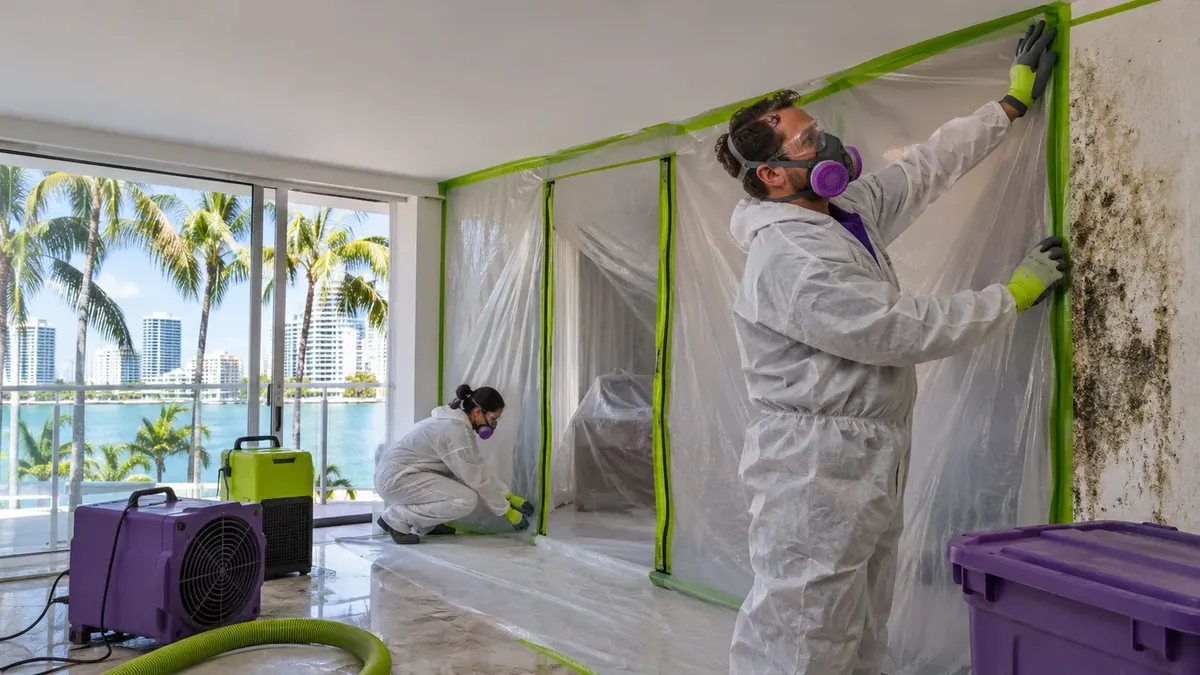
Mold Removal Miami: What Gets Taken Out
Miami mold removal jobs come down to one decision: what can be cleaned and what has to go. Porous materials soak up moisture and let growth root below the surface, so they are normally cut out. Hard materials are cleaned and kept.
| Usually removed | Usually cleaned |
|---|---|
| Drywall and ceiling tile | Wood framing and studs |
| Insulation | Concrete block and slab |
| Carpet pad and some carpet | Tile, glass and metal |
| Swollen baseboards and cabinet backs | Solid wood furniture |
A mold removal service takes drywall out past the visible edge of the staining, because growth often runs further on the hidden side of the board. Removal is one part of a full mold abatement Miami job, alongside drying the area and fixing the leak that started it.
Surface Growth or Something Deeper?
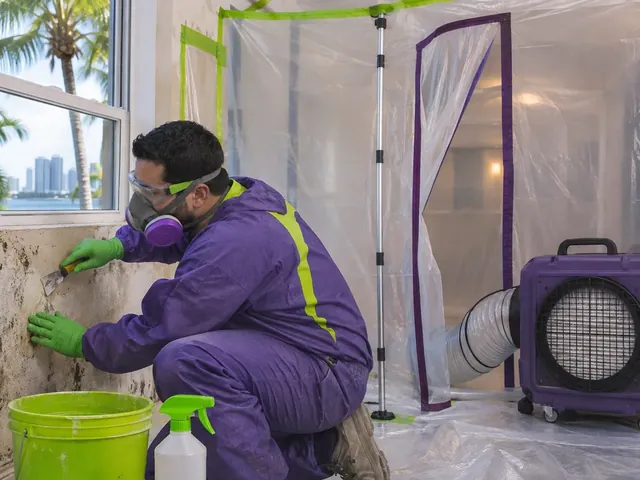
Not every patch needs a crew. The EPA’s rule of thumb is that areas under about 10 square feet, roughly a 3-foot by 3-foot patch, can usually be handled by the homeowner. Bigger areas, or any growth after heavy water damage, are worth a contractor’s visit.
Signs the problem goes past the surface:
- Drywall that feels soft, crumbles or bulges
- Staining on both sides of a wall
- Baseboards pulling away or swelling at the bottom
- A smell that is stronger inside a cabinet or closet than in the room
The EPA also warns against painting or caulking over growth. Paint applied over it tends to peel, and the problem keeps spreading underneath.
Soft or stained wall after a leak? Get it opened up.
Call (786) 767-6131Mold Clean Up Services: Step by Step
Professional mold removal follows a set order so spores are not carried through the rest of the home:
- Seal the area. Plastic sheeting and tape close off the room or wall section, and air vents inside it are covered.
- Filter the air. A HEPA machine runs inside the sealed space for the whole job.
- Cut and bag. Damaged material is cut out in sections and bagged inside the enclosure before it is carried out.
- Clean what stays. Studs, block and floors are HEPA-vacuumed and damp-wiped.
- Dry. Dehumidifiers and air movers run until the remaining materials read dry.
Mold cleanup ends when the cavity is clean and dry. Putting new drywall up is a separate step, and it should wait until the water source is fixed. Mold damage removal that gets closed up over a live leak has to be done twice.
What Changes the Price
Removal in the area typically costs $1,500 to $6,000 for most jobs. That is a typical range, not a quote. What moves a job up or down:
- Size. One closet wall is a small job; a kitchen with cabinets to pull is not.
- Location. Growth inside an air handler closet, behind tile or above a ceiling takes longer to reach.
- Building type. About half of Miami-Dade’s housing units are in multi-family buildings, per Census Bureau figures. In a condo, the crew may need elevator reservations, set work hours and a path for bagged debris through shared hallways.
- Rebuilding. New drywall, paint and cabinets are usually priced apart from the removal itself.
Before the Crew Arrives
- Stop the water if you can: shut the supply valve or have the leak repaired
- Avoid pointing fans at the growth, which can spread spores
- Take photos of the damage for your records and your insurer
- Move furniture, clothes and stored items out of the room
- In a condo, tell the association and ask about work-hour rules
- Plan for pets and children to stay out of the work area
Questions Before Work Starts
- How much does mold removal cost in Miami, FL?
- Most jobs typically cost $1,500 to $6,000, depending on the size of the area and how hard it is to reach. Rebuilding is usually priced separately.
- How long does removal take?
- A single wall or closet is often finished in a day or two. Jobs with several rooms or long drying times take longer.
- Can I just use bleach?
- On small areas of hard, non-porous surface, cleaning can work. Drywall and other porous materials usually need to be cut out because growth roots below the surface.
- Can I paint over it?
- No. The EPA advises cleaning and drying the surface first, since paint applied over growth is likely to peel.
- Who replaces the drywall afterward?
- Some contractors rebuild and some do not. Ask whether new drywall and paint are included or quoted as a separate job.
- Does removal need a permit?
- Removal alone usually does not, but the repairs that follow often need a permit. Ask the contractor which rules apply to yours.
Get Your Rooms Back
Describe the damage to a local contractor and find out what has to come out. Miami, Florida calls carry no obligation to hire.
Call (786) 767-6131